 Cursor Flow
Introvert Burnout at Work: Signs, Causes and Recovery
Exhausted after every workday? Signs of introvert burnout at work, what causes it, and practical recovery steps you can start this week.
On this page
I am an introvert, and I know the feeling of finishing a day with nothing left. This guide is practical, not medical. If you feel very low or hopeless, please speak to a doctor.
Introvert burnout vs work burnout
"Introvert burnout" is not a clinical term. It is a name people use for social exhaustion. Work burnout is better defined. The World Health Organization describes burn-out as a syndrome resulting from chronic workplace stress that has not been successfully managed, with three parts: exhaustion, mental distance from your job, and reduced effectiveness.
For many introverts, the two overlap. Constant meetings, open offices and always-on chat are workplace stressors, and they hit introverts harder because they drain the energy we normally restore in quiet.
Signs of introvert burnout
- You feel drained after a normal day, not just a busy one.
- You avoid calls, messages and small talk you used to handle.
- You need the whole weekend alone just to feel normal.
- Small noises or interruptions make you irritable.
- You struggle to focus even when you have quiet.
- You feel distant from work you used to care about.
One or two of these now and then is normal. Many of them, for weeks, is a signal to change something.
What causes it at work
Too much "on" time
Back-to-back meetings, open offices and constant chat mean you are performing socially from morning to evening.
No recovery in the day
Lunch at your desk, no breaks and no quiet place mean energy only goes one way.
Masking
Acting more outgoing than you are, all day, is tiring. Many introverts do it without noticing.
Doing quiet work in a loud way
Writing reports, emails and notes is often the part introverts enjoy. But if you dictate them out loud at a shared desk, or type all day until your hands hurt, even that part becomes draining. I wrote about this in why free dictation does not work for many introverts.
Recovery: what to change this week
1. Protect one quiet block every day
Thirty to sixty minutes with no meetings and no chat. Put it in your calendar with a plain name like "Focus".
2. Take real breaks
Leave your desk. A short walk alone often does more than an hour of scrolling.
3. Cut one recurring meeting
Look at your calendar. Is there a meeting where you only listen? Ask if you can get the notes instead.
4. Batch your social time
Do check-ins and calls in one or two windows instead of spreading them across the day.
5. Plan your evenings and weekends for recovery
Say no to some plans without guilt. Recovery is not selfish. It keeps you able to work and to be there for people.
Recovery: what to change this month
Talk to your manager
Describe the effect, not the label: "I am doing too many meetings to finish my writing work. Could I skip the Thursday sync and read the notes?"
Rethink your workspace
A quieter seat, a few remote days or regular use of a focus room can make a big difference. Our post on open office dictation without a phone booth covers working quietly when rooms are scarce.
Make writing easier on your body and your nerves
If you write a lot, typing all day is tiring, and dictating out loud may feel too public. A middle path is speaking softly into a close mic. This is why I built Cursor Flow: you speak quietly into your Android phone, or type on it, and the words appear at your Windows PC cursor. It is one option among several. A good headset also works.
When it is more than burnout
Burnout can look like depression, and the two can occur together. Please speak to a doctor if:
- You feel hopeless or empty most days.
- You have lost interest in things outside work too.
- Your sleep or appetite has changed a lot.
- You have thoughts of harming yourself. In that case, contact a crisis line or emergency services now.
Preventing it from coming back
- Review your calendar every Friday. Protect next week's quiet blocks first.
- Notice early signs, like avoiding messages, and act then rather than at breaking point.
- Keep one thing in your week that is purely for you.
I talk openly about building Cursor Flow alone, through power cuts and setbacks, in my founder story. The biggest lesson for me was that rest is part of the work, not a break from it.
A small weekly check-in
Burnout builds slowly, so a weekly check helps you catch it early. Every Friday, answer three questions in one line each:
- How drained did I feel this week, from 1 to 10?
- What took the most energy?
- What one change could I make next week?
Keep the answers in a note. After a month, patterns become clear, and you have something concrete to bring to your manager.
How to do this with Cursor Flow
- Install both apps. Get Cursor Flow for Windows and Android from the download page.
- Pair once. Open the phone app and scan the QR code shown on your PC. See pairing if you get stuck.
- Click into any text field, then speak or type. Speak softly into the phone held close, or type and tap Send. The words are typed at your PC cursor, in the app you already use.
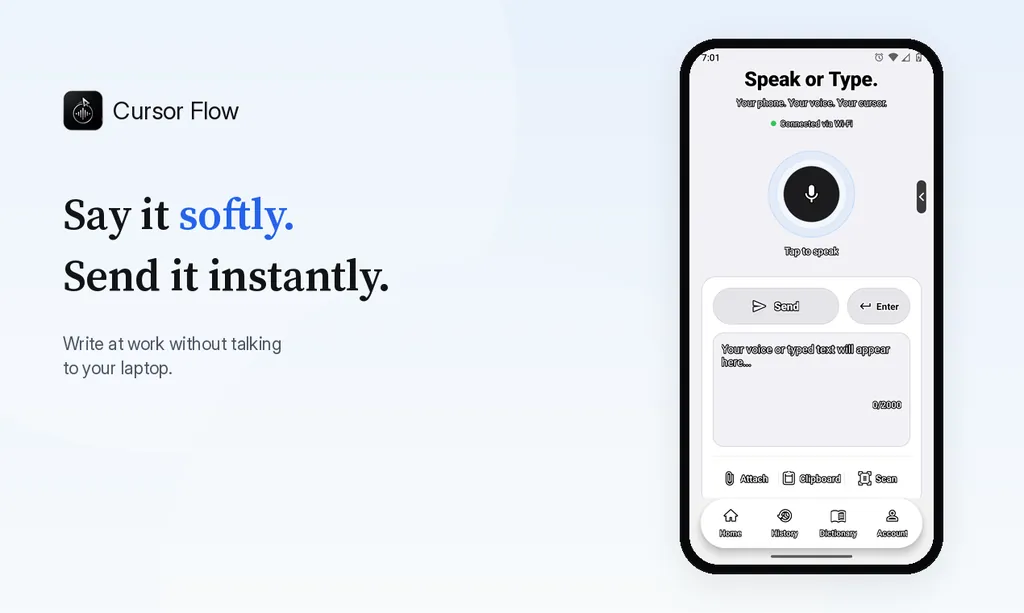
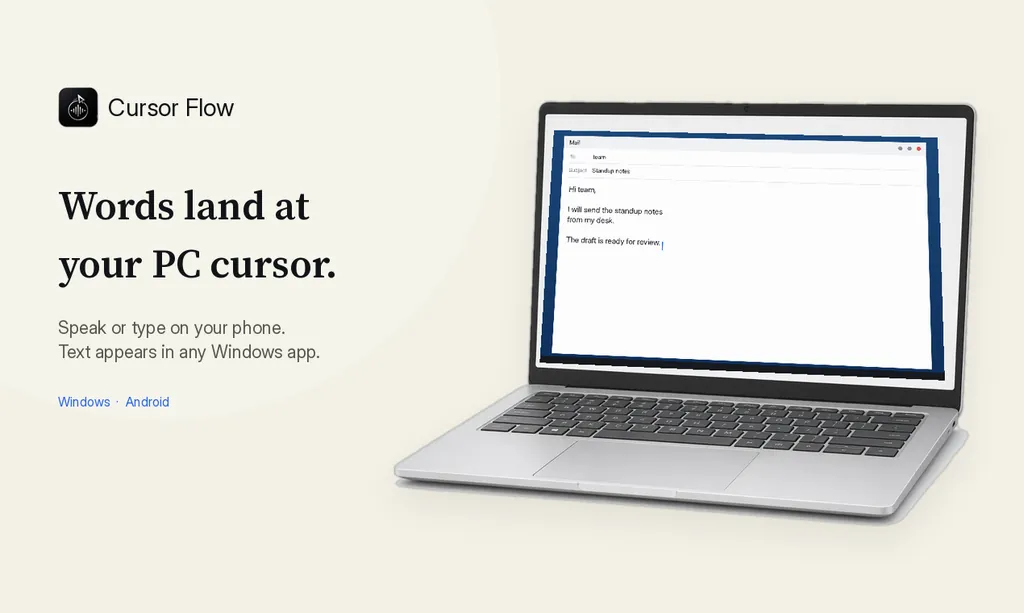
The free plan includes 2,500 dictation words a week, typing on your phone into your PC cursor, phone-to-PC files, images and clipboard, and Scan. See pricing, how phone to PC works, and silent typing from your phone.
FAQ
What is introvert burnout?
It is an informal term for the exhaustion introverts feel after long periods of social contact without enough quiet time. It is not a medical diagnosis, but it can overlap with work burnout, which the WHO describes as chronic workplace stress that has not been managed.
What are the signs of introvert burnout?
Common signs are feeling drained after normal workdays, avoiding messages and calls, irritability, trouble focusing and needing the whole weekend to recover.
How long does it take to recover?
It depends on how long you have been running on empty. Short-term relief can come within days of adding quiet time, but deeper recovery usually needs lasting changes to how your week is set up.
Should I quit my job if I have introvert burnout?
Not necessarily. Try changes to your schedule, workspace and communication first, and talk to your manager. If nothing improves, a different role or setup may fit better.
If writing at a shared desk is part of what drains you, try Cursor Flow free with 2,500 words a week and no card.
- 57languages
- 2,500free words a week
- Windows + Androidone paired workflow